

Opened in 2025, Abu Dhabi’s Natural History Museum by Mecanoo showcases the Arabian region’s natural history with fossils, meteorites, interactive exhibits, and immersive architecture inspired by rock formations and geometric design.
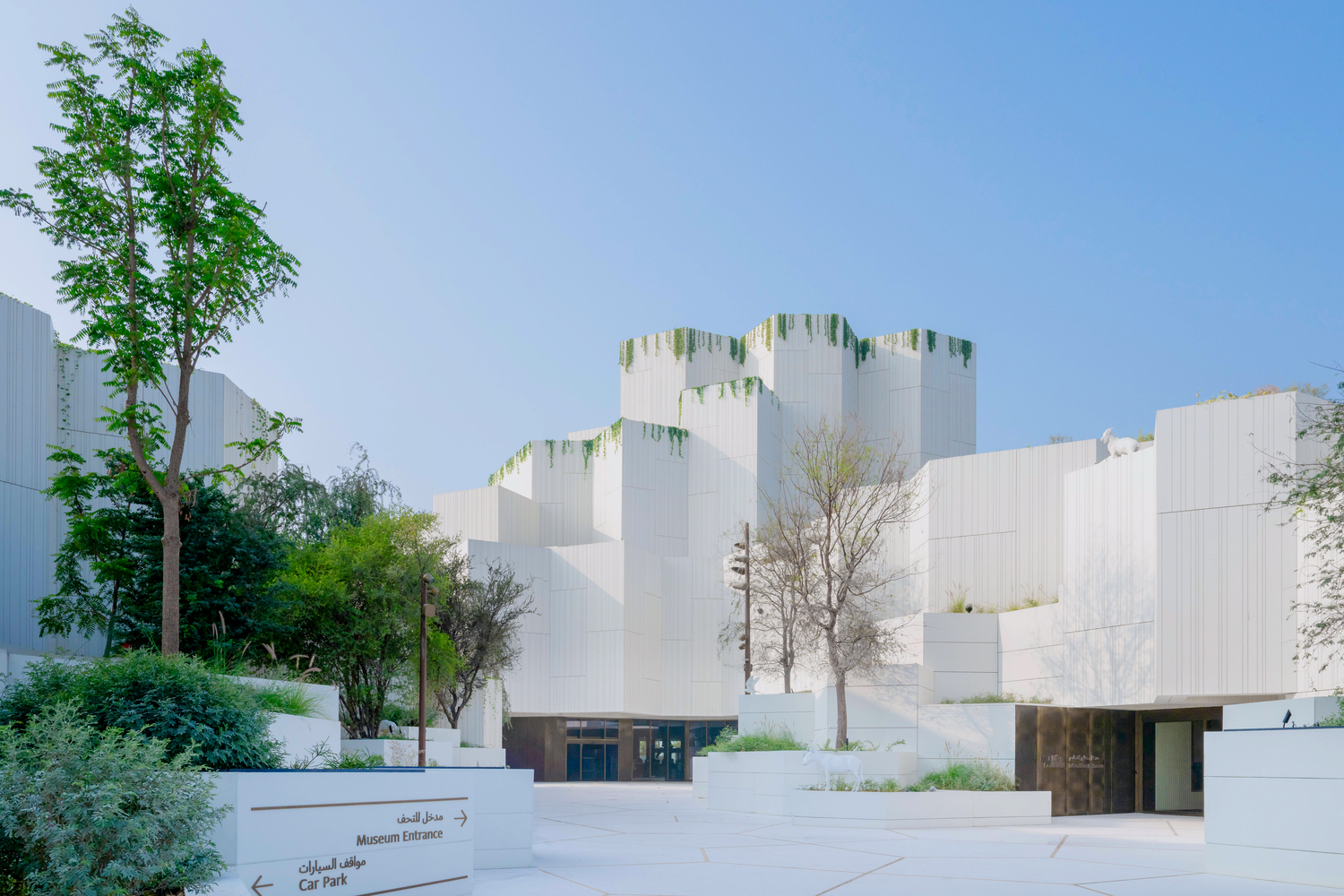
In April 2022, Abu Dhabi revealed the first visuals of its upcoming Natural History Museum, a landmark project by Dutch architecture firm Mecanoo. After three years of anticipation, the museum officially opened to the public on November 22, 2025, showcasing 13.8 billion years of scientific exploration with a particular focus on the Arabian region. Spanning over 35,000 square meters, the museum’s design draws inspiration from natural rock formations, using geometric forms—particularly pentagons that echo cellular structures—as a central unifying motif. Elements such as water and greenery, representing life in the desert, are key features that enhance both the aesthetic and ecological storytelling of the site. Situated in Abu Dhabi’s Saadiyat Cultural District, the museum presents rare meteorites, dinosaur fossils, and immersive reconstructions of prehistoric landscapes, blending natural history, narrative-driven exhibits, and interactive experiences. Through hands-on displays, special events, and community-focused science programs, it aims to spark curiosity and engagement among visitors of all ages.
The Natural History Museum Abu Dhabi explores the evolution of life on Earth through a distinctly Arabian perspective. Its exhibitions cover the birth of the universe, the development of life, and the natural history of the region, while positioning the museum as a global center for research in paleontology, biodiversity, and earth sciences. The building includes specialized scientific facilities such as the Palaeo Lab—where guests can watch fossil preparation and research in action—and the Life Sciences Lab, where specimens are examined to study species adaptations, behaviors, and ecological interactions. Complementing these facilities, the museum offers ongoing educational workshops, public programming, and community-driven initiatives to make natural history more accessible and engaging.
The museum’s architecture is inspired by designer Nuno Fontarra’s recollections of tidal rock formations in Porto, Portugal, which Mecanoo reinterpreted for Abu Dhabi. The nearby wadi, a seasonal riverbed, provided a natural reference point, informing the design as a rock-like formation bridging land and sea. The structure emphasizes public accessibility, with flowing circulation routes connecting the building’s volumes and integrating the waterfront. Its modular layout supports future expansion, reflecting the organic growth patterns found in cellular systems. Hanging gardens and green terraces further connect the architecture to its surroundings, allowing the museum to evolve alongside its landscape. Advanced climate-control and air-quality systems safeguard both visitors and collections, maintaining optimal temperature, humidity, and air purity throughout the facility.


